
CIOReview APAC Weekly Brief
Be first to read the latest tech news, Industry Leader's Insights, and CIO interviews of medium and large enterprises exclusively from CIOReview APAC
A featured contribution from Leadership Perspectives: a curated forum reserved for leaders nominated by our subscribers and vetted by the CIOReview Advisory Board.

Faurecia
The Transformative Automotive Industry
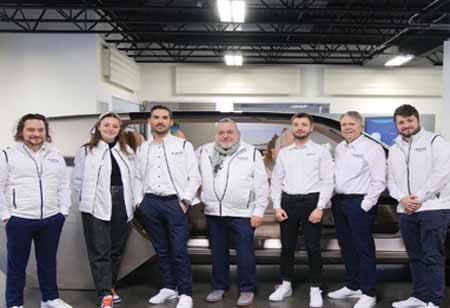
Transformation is at the heart of the automotive industry today. Carbon neutrality, autonomous driving, and connectivity converge simultaneously to reshape the automotive industry and vehicles as we know them. These market factors impact vehicle architecture and the market’s expectations of the cockpit experience. This transformation drives innovation and user experience, including the interaction between consumers and the interiors of their vehicles. In a transforming industry, transformative companies are needed. FORVIA, the 7th largest automotive supplier globally, combines the complementary technology and industrial strengths of FAURECIA and HELLA to shape safe, advanced, customized, and sustainable mobility experiences.
Tell Us About Yourself
As Senior Manager of Industrial Design in North America at FORVIA, our team is driven to inspire mobility and ultimately lead interior transformation to enhance user experience. Within FORVIA, we have a design studio at each Interiors tech center, including one at our North American headquarters in Auburn Hills, MI. Our studio covers everything from styling, color materials and finish (CMF), surface creation and visualization, and HMI development, including design quality and perceived quality. We follow projects from innovation or client collaboration through to design validation for the first component produced.
Tell Us More About Forvia
FORVIA comprises the complementary technology and industrial strengths of Faurecia and HELLA, creating the seventh-largest global automotive supplier. We bring together expertise in electronics, clean mobility, and lighting, interiors, seating, and lifecycle solutions to drive change in the automotive industry
How is the Role of Design Evolving Within the Automotive Industry?
Focusing on Interiors, these products are the most visible elements in the cockpit, so design and styling are critical. Our design team brings a user-experience perspective to innovation projects as well as provides vision and creativity to the organization based on user and client insights and trend monitoring from the industry. Because every vehicle occupant is different, it is important to focus on designing a versatile and customized environment that adapts to each occupant’s needs - whether for individual comfort or for shared onboard activities. Additionally, with electrification as a fundamental shift for the automotive industry, consumers prioritize sustainable mobility. This goes beyond providing solutions for lower or zero emissions during the vehicle’s use phase – it also includes the design and manufacturing of our products and the materials used across product lines.
How is the Market Evolving Within The Automotive Industry?
Some of the key market trends we see in the automotive industry are: • Electrification and Energy management • Smart & Automated driving • Personalized experiences in a digitalized and sustainable cockpit We have also seen the impact of raw material volatility, vehicle sales decrease, and the COVID pandemic.
In Your Role, How Would You Define the Future of Innovation Within the Vehicle Interior?
As the demand grows for electrification and autonomous driving, the vehicle architecture will undergo a complete overhaul moving away from a conventional design. The driver and passenger are looking for a safe and comfortable ride and an experience while they are on the move, a third place. This third place could be a workspace, a living space, or an entertainment space; the options are endless. From simplifying the cockpit and decreasing distractions for driver and passenger to allowing increased functionality, HMI on-demand is key to a zen interior with hidden-to-lit technology and transitioning away from the ‘bigger the better’ display functions of the past. To support automakers' objectives and end-users' desire for more sustainable vehicles and materials as well as our own netzero roadmap, we not only have to consider the architecture and functionality, but we also need to revamp the surface material and traditional components to sustainable options.
